Showing posts with label mom. Show all posts

Wednesday, March 26, 2008

Scripts, Recipes and Banana Bread

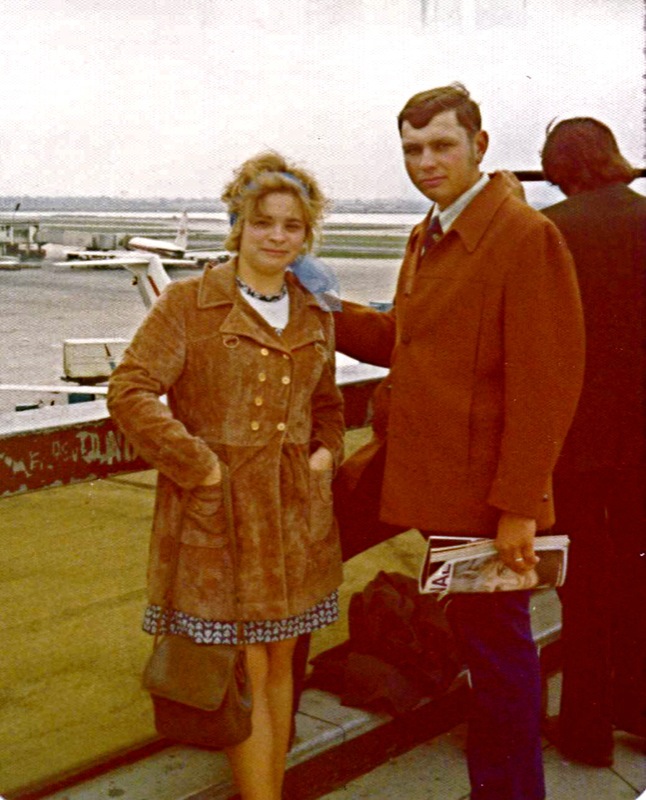
I love, love this photograph of my parents. Dad's tie and baby face aside, it's mom's sassy scarf and swingy coat that make it for me. And she's doing this thing that she still does in photos where she tries not to smile. Because her smiles wreath her whole face so that her eyes crinkle and it looks like she's squinting. She really hates that. Dad looks somber because, as a general rule, that's how all the men in his family smile in photos. It's true.
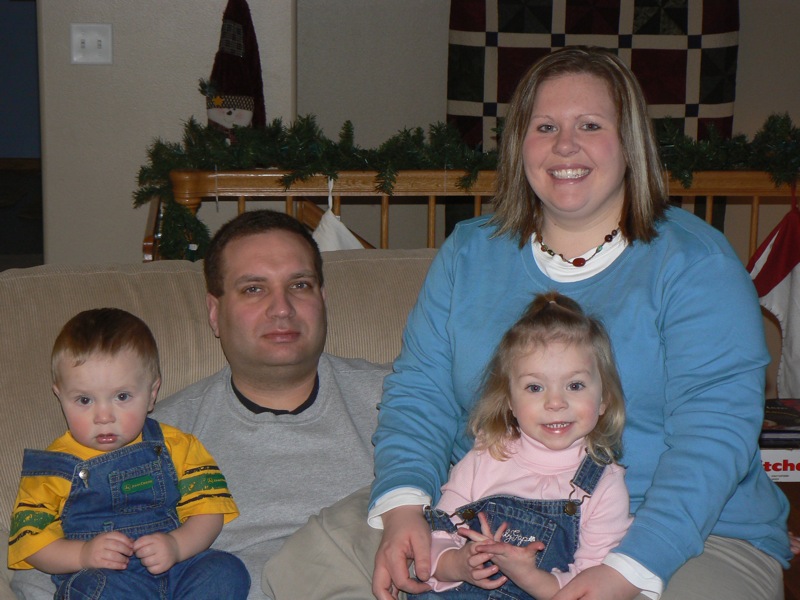

Exhibit A and B: That my brother. He's stoic. And my nephew; he's stoic, too.

I came across the airport photo, taken shortly after my parents were married, a couple years ago when I was looking for some things to put together for my own wedding. And I tried to imagine what it was like for mom to get engaged, plan a wedding, move from a small town in one state to set up house on a farm in another without her mother to assuage any fears and offer guidance. There are moments when I'm overcome by the enormity of what it meant for her to lose her mother so young, because we inherit things, you see. Brown eyes. Wavy hair. Long fingers and toes. And scripts, generations in the writing, explaining who should be loved, how and how much.

I don't know too much about my mom's dad, other than that he owned a filling station, drove a school bus, took his coffee scalding hot and was generally disliked by grandma's family. He always kept a picture of grandma on his bookshelf, though, and when he'd see me looking at it, he'd say "She was a beautiful woman." I remember that, and how he'd pat me on the back and say "That's my girl" when I'd give him a hug and a kiss at the end of a visit. Other than that, grandpa never had much to say, and I’m certain he must have been at a loss when he was left a widower with two barely teenage daughters.

The same way mom was often at a loss with me. I don’t think I was a particularly difficult teenager, just a typical one with the usual sorts of angst, but mom never had the opportunity to be a typical teenager – she was too busy keeping house, going to school and working at this café that I hear tell had the best waffles, which were served with ice cream (!) – to have time for usual angst. So she had to improvise her way through the gaps in an unedited draft of motherhood, and it took us some time to figure things out.

In the meantime, we had some epic battles, many of which took place in the kitchen and several of those over 4-H. Mom, as I’ve said before, is an exacting cook, but I imagine that a young girl suddenly in charge of maintaining a house and feeding her family would have to be. Having a recipe and following it to the letter must have been a lifeline – and offered a small moment of connection to her mom.

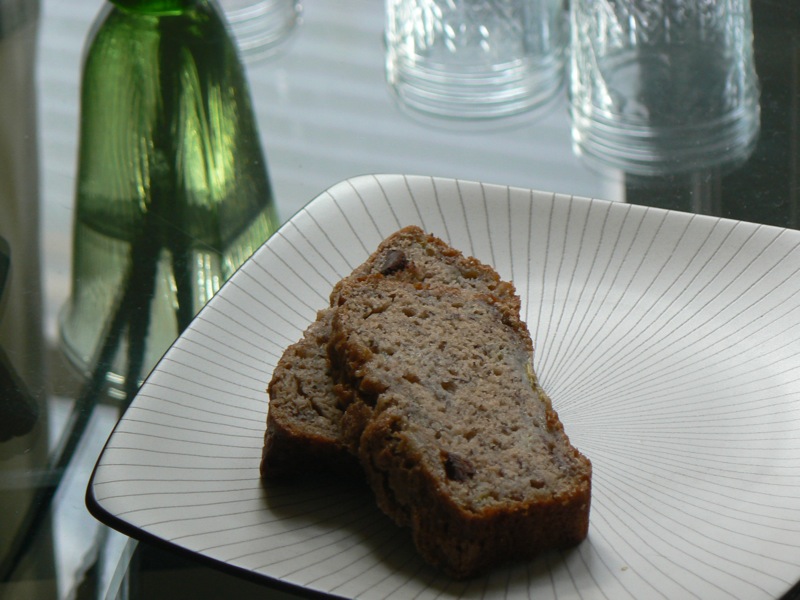
That being said, I’ve made a few adaptations to this banana bread recipe, which is one of the first things I remember making entirely on my own.


Banana Nut Bread (courtesy of my mom)


1. Sift:
2 cups flour
1 teaspoon baking soda
1 teaspoon salt

*I also sifted in two teaspoons of cinnamon; one would probably do just fine, but I’m hooked on the Vietnamese cinnamon from Penzey’s.

2. In a separate bowl, cream:
1/2 cup shortening
1 cup sugar

Then, add 2 eggs, one at a time.

*I used a 1/3 cup of unsalted butter instead of shortening (in general, you need about 1/2 cup butter for every cup of sugar when creaming, so this came together with a little more mess -- i.e. sugar flying out of the bowl -- than usual). I’ve seen a recipe that calls for a 1/4 cup of melted butter to be stirred in at the very end, but I'm not sure how it would affect the texture and structure of the bread, though I recently made a banana bread that didn’t have any butter or shortening and it was wonderful -- so I might try that melted butter thing next time.

3. In a separate bowl, beat:
1 cup bananas (about three)
1/2 cup milk
1 tablespoon vinegar

*I’ve always wondered about the vinegar; I honestly thought it did something particular to the bananas, so I asked mom about it. She said it was supposed to be stirred in with the milk first, to make it more like buttermilk...I just went with straight-up buttermilk; I had it on hand. And I added a generous teaspoon of vanilla, though you could also put in the same amount of dark rum, if you were so inclined.

4. Mix the banana mixture in with the creamed mixture alternately with the flour mixture. Stir until just combined and add in 1/2 cup nuts of your choice. Bake at 325 degrees for 60 minutes.

*I decided to forego the nuts in favor of a 1/2 cup of dark chocolate chips. And I’m not sorry; you won’t be either. In fact, if you’re really feeling crazy, you could add both. I also sprinkled the top of the loaves with some cinnamon sugar before baking.

5. Makes two loaves in smaller pans, but baking time will have to be adjusted accordingly.

P.S. Maybe Yeti would like this version! Nuts are optional.

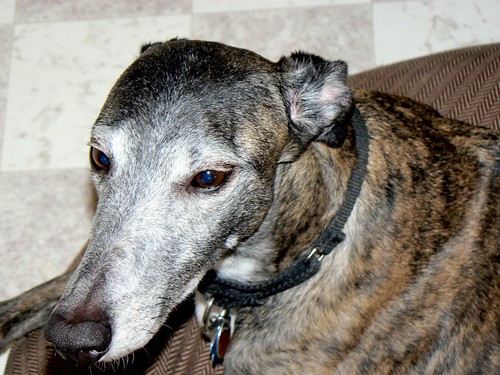
*I have no doubt Yeti would like this version; she downed an entire loaf the last time I made banana bread, and apparently mom is still amused. While I understand this is part of the danger of having a creature that’s eyelevel with the counters living in your house, I was pretty incensed. I (gently) whapped her on the head with a sock and called her a name that wasn’t very nice, but didn’t involve swear words or taking the Lord’s name in vain.

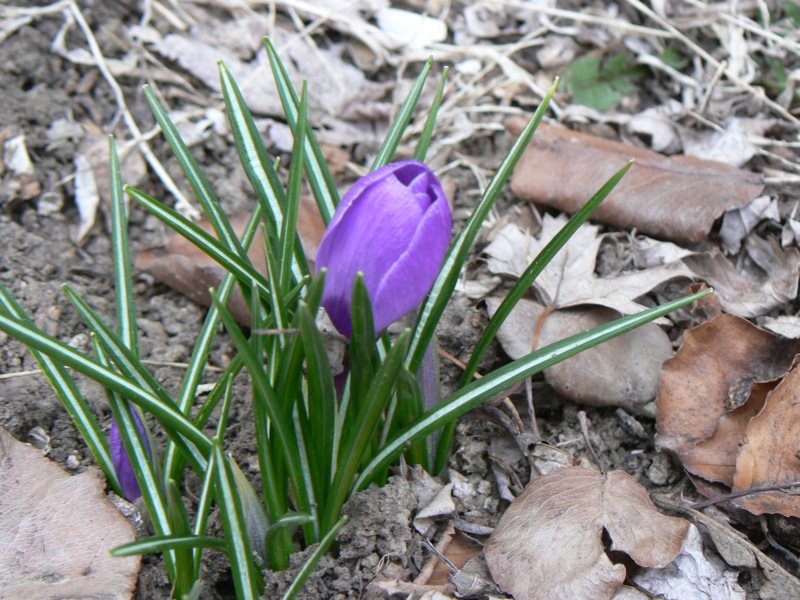
Once, when my brother and I had pushed mom to the uttermost limits of her patience, she called us a bunch of dorks and deadheads. But I’ll save that treasure for another day, and leave you instead with this lovely, lovely glimpse of spring I found peeking out of my flowerbed last week.
Monday, March 3, 2008

On Cake!

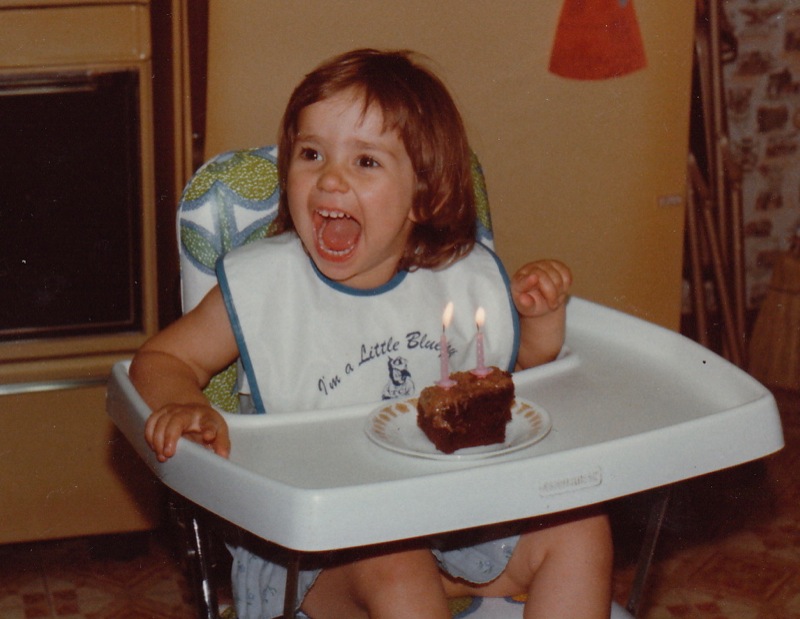
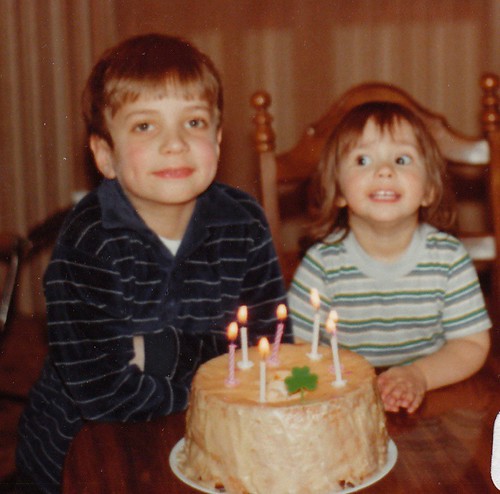
When it came to birthday cake, my brother, at least in my opinion, was at a disadvantage. He was born on St. Patrick's Day, you see, and mom, after assessing the situation overnight, changed his name from Dustin to Patrick and every year thereafter baked him an angle food cake, dyed green, with powdered sugar frosting, also green. This, of course, came after the green sugar cookies and green buns accompanying that day's celebratory lunch at school. He suffered all this with good grace, and claims to still like cake of any color, though now he can have it with green beer. But we don't talk about that around mom.

Green or not, at least he had a birthday cake. Mom, a New Year's baby, rarely had one, unless you count (and I don't) the birthday brownie at Perkins. By the time January 1 rolled around, all members of the family (and probably even the dog) were so sugar sick, having breathed it in and nibbled it in various forms nonstop since Thanksgiving, that even the thought of birthday cake was unappealing. So instead we bundled up and drove to Mitchell for a movie and dinner at Perkins or Godfathers, whichever the birthday girl preferred.

Dad, on the other hand, invariably got a German chocolate cake, sometimes straight up in a 9"x13" pan, sometimes stacked three 8"-round layers high, which, in my opinion, offered the better ratio of tender buttermilk cake to coconut-rich frosting. But since his birthday generally fell right in the thick of achievement days, the kind of cake he got depended on how much time we had, how much mom and I had tried each others' patience and if she had agreed to help with the horticulture judging.

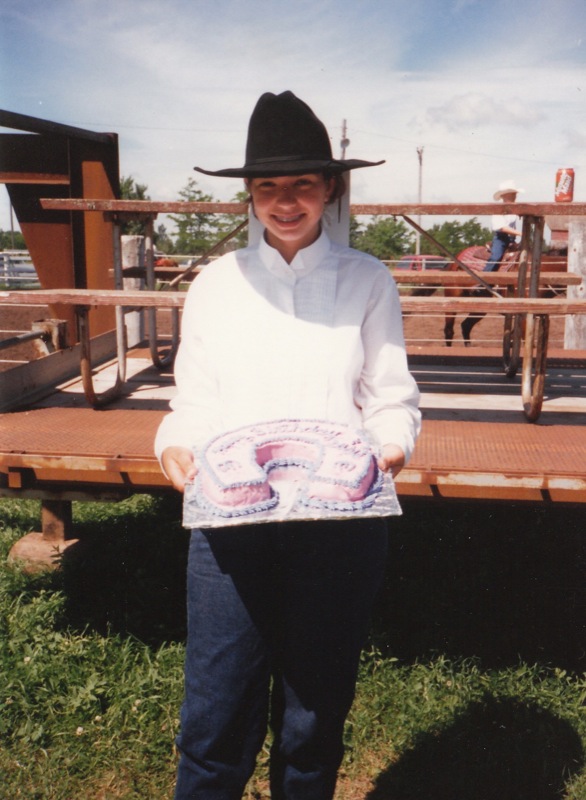
For me, birthday cake, as with most sweets, is really about the ice cream. So other than the My Pretty Pony cake when I was four or five and the horse-shoe-shaped cake presented in the middle of the county horse show (where the first unrequited love of my life Bruce S. was also competing) as a decidedly mortifying surprise to celebrate my 14th birthday, no cakes really stand out.

Except for fudge crème de menthe cake, which, incidentally, happens to have green frosting, too. (And my birthday -- it's on my parents' anniversary. We believe in multitasking our holidays.)

Whatever the cake, though, it was homemade. That, along with the perfect card, was how mom did birthdays. And while I will allow that there are occasions when cake mix can achieve perfection -- hospital coffee cake, for example, or the first cake your husband bakes ever and its for you, on your birthday -- as a general rule, it belongs in the same category as ramen, Doritos and Coke. This is the kind of birthday cake my husband grew up on. White cake, to be exact, with rainbow chip frosting. And he loves it. Raves over it.

I can't make it for him, though. I just can't. It's too easy and without the little bit of extra effort, how can he be assured of my undying affection? Yes. Yes it's true. I am my mother's daughter. So this year I made the cake from scratch, the frosting, too, and added the confetti sprinkles as a nod to J's long-time affair with Betty Crocker.

I'm not condemning cake mix users; I understand that baking isn't everyone's thing, but I love everything about it except the dirty dishes, so you can imagine how immensely gratified I was when my co-worker asked me to make a cake for her father-in-law's birthday.

My mom's go-to cake recipe for everything from brownies to cupcakes is called Good and Moist Chocolate Cake because, obviously, it's good. And moist. I can attest to it.

Here's the recipe (courtesy of my mom):

2 cups sugar
2 ½ cups flour
5 tablespoons cocoa
1 teaspoon baking powder
¼ teaspoon salt
2 teaspoons baking soda
1 cup hot water
2 eggs, unbeaten
1 cup salad oil (i.e. canola oil)
1 cup buttermilk
1 teaspoon vanilla

Sift together sugar, flour, baking powder, cocoa and salt. Dissolve soda in hot water and add remaining ingredients. Beat two minutes. The batter will be thin. Bake at 350 degrees for 45 minutes.

This cake is pretty much perfect. Light and delicate. The kind of cake you could eat at until you put down your fork in surprise to see that half the pan (or a dozen or so surprise cupcakes) was gone.

I wanted something richer, so I used Orangette's Far From Disaster Cake, which also calls for buttermilk. Only I called it the flattery-will-get-you-everywhere cake because a) I know that my co-worker has a friend who makes wedding cakes and b) it didn't dampen my excitement about the project.

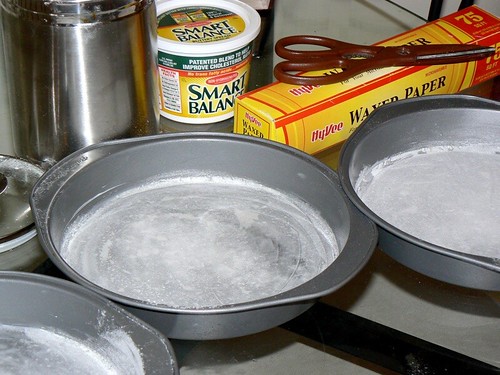
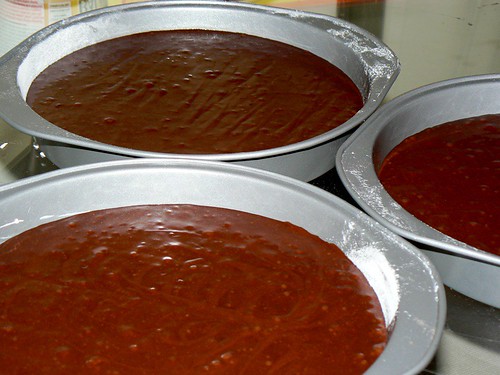
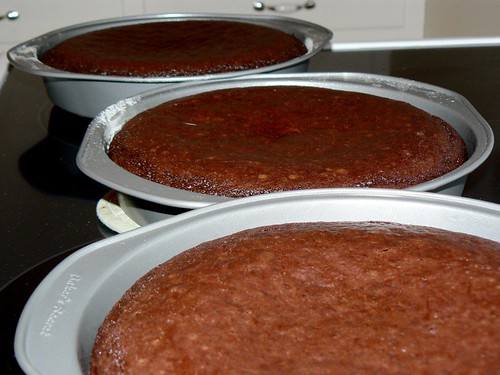
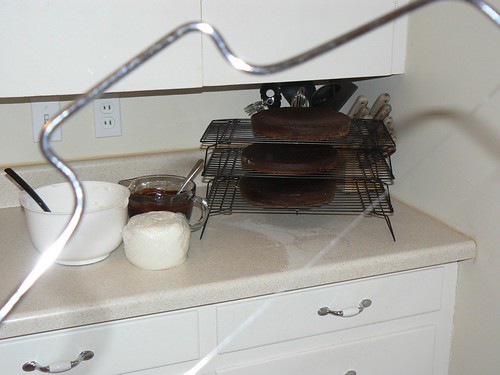
1. I made it in three layers, though it's just as good in a 9"x13". I've heard contradictory things about greasing the sides of cake pans. My mom does, but I don't because I heard or read or somehow acquired the opinion that the cake won't rise as high if the sides of the pan are greased. I should probably figure this out for sure.

2. Before baking.

3. After baking.

4. After layering with ganache.

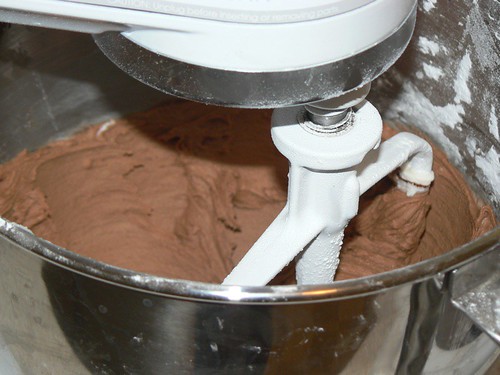
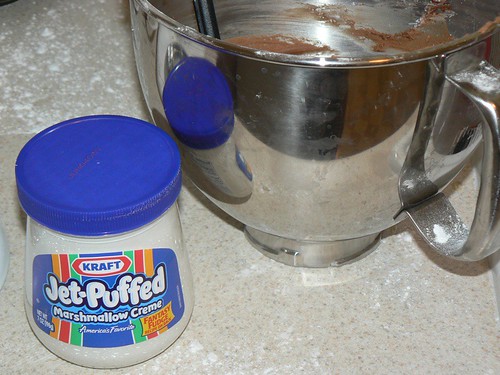
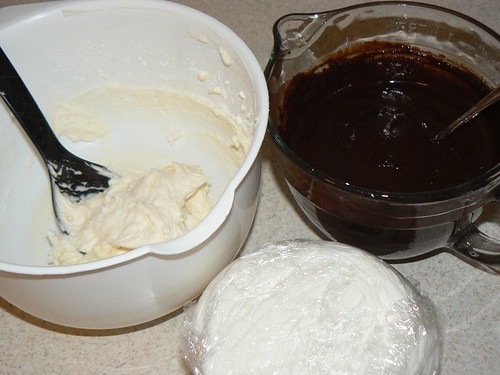
5. And now, for frosting. My friend requested a light frosting. Cream cheese frosting was too rich; I was afraid to try a meringue frosting for the first time on some dear stranger's birthday lest I give someone food poisoning. I could have done a whipped cream frosting, but instead I asked my cake expert friend Sarah for advice. She recommended a chocolate buttercream with a secret ingredient:


6. Marshmallow creme. She's brilliant, that Sarah.

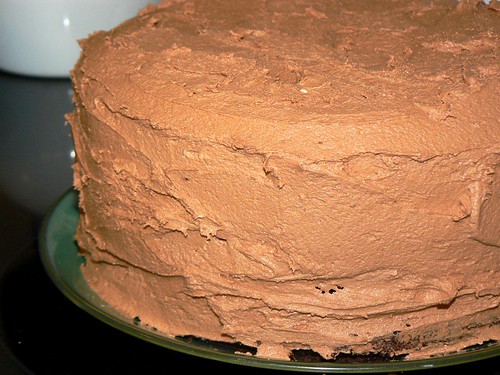
7. And here, friends, is the charmingly lopsided, imperfectly frosted result. It got a favorable review. And then, when we were planning an engagement part for my kolache-loving coworker, the cake was requested again.

8. Only I decided to dress it up. In fondant. This required more advice from Sarah:

Once your cake is completely cool and each layer is assembled, do a crumb coat (a thin coat of buttercream icing to seal in the crumbs on the cake). This will also allow the fondant to adhere to the cake.

Then, once the crumb coat is set up, I like to do another layer of buttercream that is as smooth as possible as the fondant shows all bumps. Make sure your rolling surface is totally clean and clear, the fondant will pick up
any little grains, etc.

Prepare your surface with shortening and a dusting of corn starch. Roll the fondant to the appropriate thickness (about 1/4 inch). To get the desired circumference, take a ribbon or string and cut it to the height of your cake (go up one side down the other) when you stretch the ribbon out your fondant should be slightly larger than the length of the string. You'll only use one side of the fondant (you won't turn it over like you would with pie crust or pizza dough), but it is a good idea to pick it up throughout the rolling process using your spatula to make sure it is not sticking -- use corn starch as needed.

Once you've got your fondant circle and prepared cake, hold your rolling pin in the center of the fondant circle and drape half over the pin toward yourself. Once you've done this, reverse the process on top of the cake. Gently lay the fondant in the center draping it over the sides. Use your hands or a fondant smoother to smooth the fondant over the top and sides of the cake, massaging down and around. Cut off the excess.

I used this recipe for the fondant. It was a lot easier to make and work with than I expected. Seriously. (Still, the cake took all weekend to assemble. The price of pride, I guess.)


9. I also decided to use a cake leveler. Because let's face it: Lopsided isn't always charming.

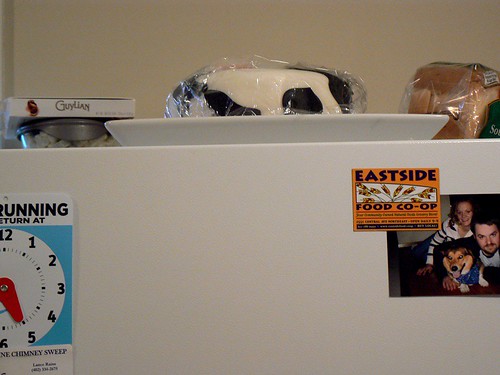
10. There it is. Safely out of reach of the roving thief that stalks all things edible in the house. (Can you tell what it is?)

11. The roving thief.

12. It's a cow cake. A cow cake. How about that?

ps -- Here's proof that some things never change, and that my brother and I are definitely from the same gene pool.

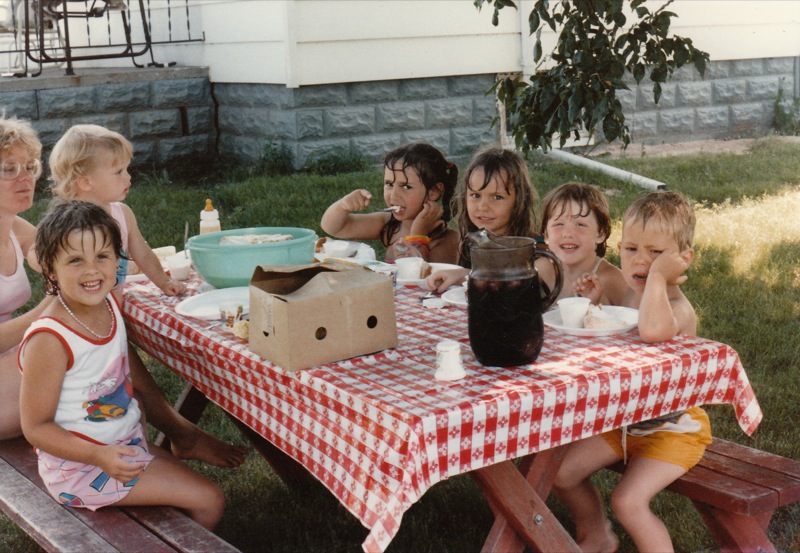
1. Circa 1986. Betcha can't tell which one I am.

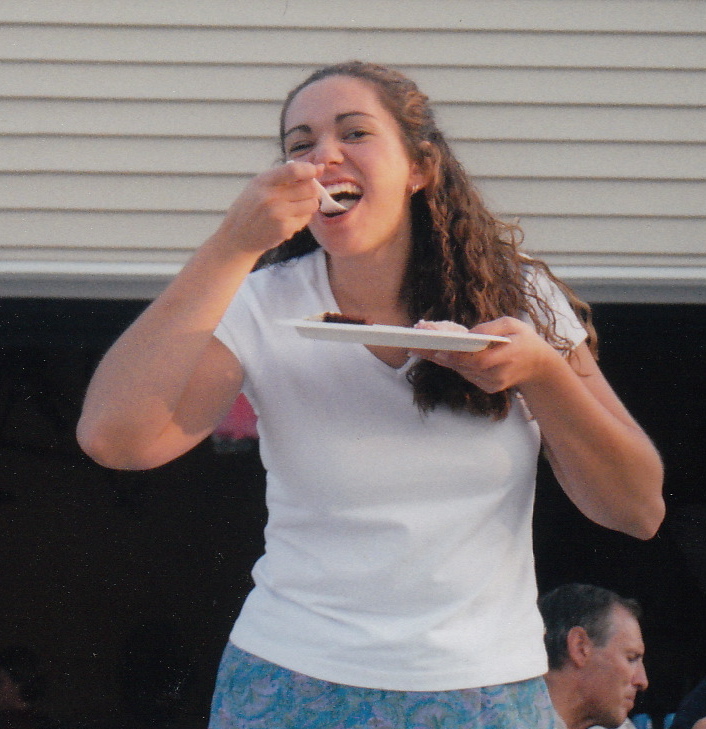
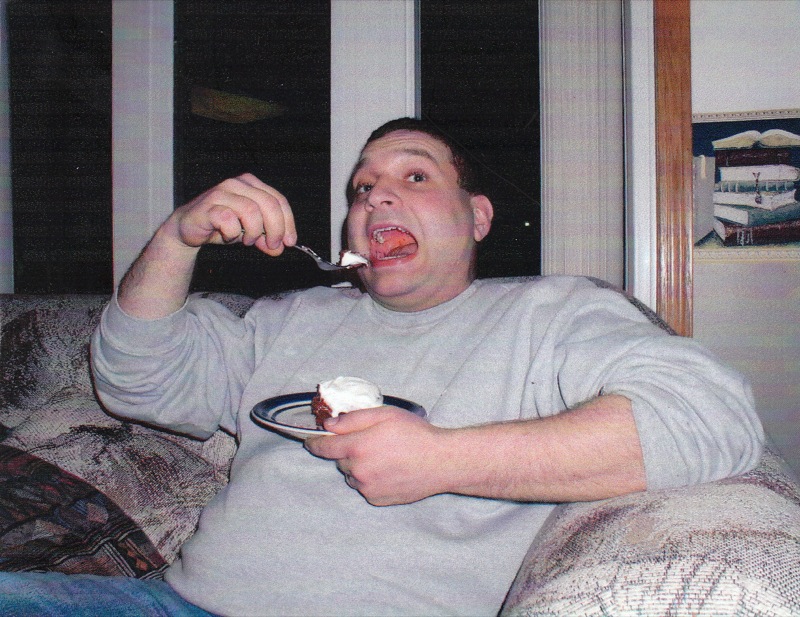
2. Circa 2002:3. Circa 2005:

Thursday, February 28, 2008

I have a confession:

I don't really like meat. Never have. In other families such disinclination might be unremarkable, or even encouraged, but my people are salt of the earth meat-and-potato sorts who butcher their own beasts, make their own sausage and celebrate birthdays and anniversaries and other occasions of note with chislic (see Blackie, pictured above) feeds and prime rib. I could go on, but suffice it to say that my family really likes a good steak or pork loin or duck or even a crawdad feed. So I've worked hard to hide the fact that I don't -- disguising a paltry portion of Thanksgiving turkey behind heaps of mashed potatoes, sweet potatoes, or, God willing, a nice big serving of pretzel salad and nibbling around the well-done edge of my piece of prime rib.

Even so, I'm sure I never fooled anyone, and my mother is the only one who still harangues me about this particular failing, though it's more focused on whether I cook enough meat for J. (My grandma is just concerned that I cook enough for him, period). He's thin, you see, and there's nothing that triggers their save-the-world-one-good-meal-at-a-time instincts like a skinny man. I'd like to point out, though, that I'm not the only one in the family with meat "issues:" One of my cousins won't eat seafood because the ocean creeps her out. And there's the uncle who refuses to eat chicken or anything else that was once feathered.

For the record, I do eat meat, albeit irregularly, and sometimes I really do crave a steak, but mostly it's pork chops or white meat chicken, though I was in high school before I'd even attempt that much.

I had an intimate familiarity with the lifecycle of that fair bird, you see, and once the mystery is gone, well, it's just gone, though you have to understand that I was a particularly sensitive and squeamish child. Squeamish children don't do well with blood and guts no matter how much they want to be like Laura Ingalls and her enterprising ma making head cheese over an open fire. (Check out these brave little Laura scholars).

The whole thing got started in spring when grandma ordered her chicks.

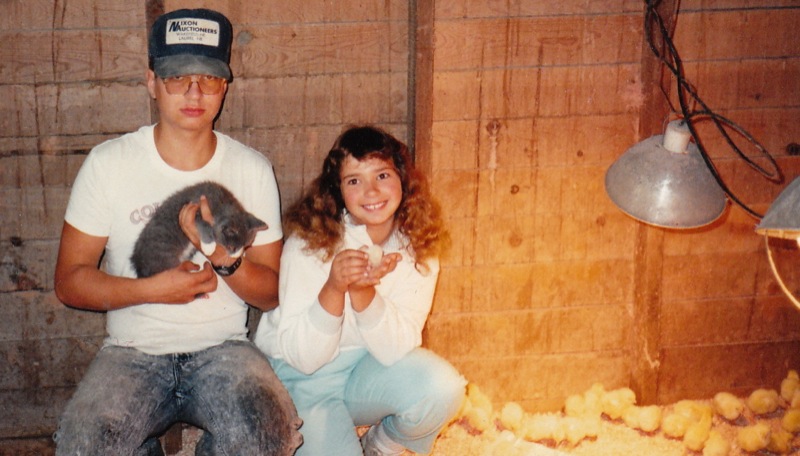
They arrived in the mail a few weeks later, all whisper soft and warm and peeping to settle in under the heat lamps in the brooder house, where they passed an awkward half-chick half-chicken adolescence with feathers gradually taking the place of down until they were mature and clucking and ready to butcher, about six to nine weeks later.

At this point, friends, grandma called together the girls, usually my mom and assorted aunts and cousins, for a butchering. I always tried to find something to play that would keep me out of sight and mind, but my mom was not so easily foiled and she was big on having me help ( I think she wanted to work that squeamishness right out of me). Part of the crew set up a propane burner in the quonset to start some water boiling. Grandma, meanwhile, slit throats out behind the brooder house and then released the chickens to flap, headless, through the weeds. One of my jobs, as I recall, was to watch where they finally flopped still and then dart through the now blood-smeared weeds to collect the carcasses.

From there they were taken to the quonset for processing. First step, plucking: We gathered around the propane burner on upturned 5-gallon buckets, newspapers spread out on the floor to catch the feathers, but first the carcass had to be swirled through the boiling water to soften the feathers. I was supposed to help pluck, but I didn't like touching the wet, warm feathers -- or the smell -- and so I did a pretty poor job of it. While I still suffer some residual guilt from that, truth be told -- I wouldn't change a thing. After the chickens were laid bare, grandma inspected them, lighter in hand, for stray barbs or any other undesirables that might need to be scorched off. That smelled awesome, too.

Then they were gutted. Again, I was supposed to help with this, but I could not stand even the thought of sticking my hands into the mysterious slippery innards of a chicken carcass, so mostly I watched. If there had been gloves, I might have done it, but requests for said gloves were dismissed as ridiculous. Besides, my cousin Heidi had no problem with the task, and that's why she's now a traveling nurse who's seen the world and I'm just a lowly humanities major turned journalist stuck at a desk all day. True, true. But the thing I remember most about this step was that grandma slit open the gizzard to empty out the chicken's last meal. It was fascinating, but sad, really; they didn't even have time to digest. She didn't save them, though; grandpa wasn't big on gizzards.

The carcasses got rinsed out, I think, and then frozen, with a few left out for eating fresh.

Blech.

To be clear, I'm not claiming this was some sort of traumatizing or even disillusioning experience. I had -- and have -- no moral or ethical objects to meat in theory. I grew up on a farm, and I knew what happened to Midnight the prize-winning sow when she didn't come home from achievement days.

In fact, I rode along with dad to take her to the locker in Freeman. And I knew why she had to go -- you didn't bring home pigs that could have been exposed to Lord knows what at the county fair, even in the name of 4-H State Fair. I'm just saying that I didn't like meat and being intimately familiar with how it went from coop to plate gave me yet another reason to be persnickety about the whole business.

But then I took philosophy in pursuit of a liberal arts education and the professor made us watch some video about factory farming.

It's the only thing I remember about the class, other than that I was always late, sat toward the front and usually fell asleep.

Still, it made me start thinking about what it means to be called to stewardship in all things, including the kitchen.

Sustainability is definitely en vogue these days, and the discussion becomes treacherous at this point, with talk of food miles, carbon footprints, organic food, local food, local as opposed to organic food, Whole Foods versus Wal-Mart versus Jane's Health Market versus the farmers' market, and, of course, Michael Pollan.

I try not to get too tangled up in all of this. I want my eggs to come from chickens with beaks, and if f I'm going to eat chicken, I'd rather she be a clucking, scratching, pecking chicken, than an oversized breast on legs that would fall over, given the space to move. I'd like my beef to be grass fed; if they have to spend time in a feedlot, it shouldn't make up the majority of their existence. Pigs need space, too, to root and roll (and perchance even fly), but if they're sick, they should be treated with all the proper antibiotics. And when it comes time for a dairy cow to be culled, it should be with the respect one living thing owes to another. (See Linda Hasselstrom's lovely work for more perspective on this topic.)

I understand that working in a packing plant could make one numb to the chores of slaughtering after a while; that's why there are supposed to be rules and regulations for the industry and inspectors to enforce them. I also understand that, ultimately, it comes down to money: The more cattle processesed, the more meat sold. And, for the consumer, too: Not everyone can afford graded beef, let alone free-range organic beef.

But for the people who can: Jamie Oliver recently butchered a chicken in front of a studio audience, to awaken British consumers to the high costs of cheap chicken, according to this article in the New York Times. "A chicken is a living thing," he told the paper, "an animal with a life cycle, and we shouldn’t expect it will cost less than a pint of beer in a pub.”

His technique follows the general idea of grandma's. And that brings me around, finally, to the point I wanted to make all along -- I had stewardship modeled for me long before I started wondering about it in philosophy class: Grandma loved those chicks destined for the chopping block; Midnight had a good life with lots of brushing and even a few baths. My brother and I had our share of bottle calves and lambs to tend, and if their names didn't end up on the package in the freezer, I have friends whose animals were honored that way. There's a rightness to that, a quiet common sense that makes its point, and all without the fanfare and theatrics involved with killing a chicken on TV.

And while I still wouldn't volunteer to pluck or gut a chicken, I do have a ring of smoked sausage from my dad waiting in the freezer for a lazy Saturday morning breakfast, should J. ever get hungry for it.

Because to be honest, I probably won't.

P.S. If you want to fix yourself some head cheese, here's a recipe. But first, watch this for pointers; she's wonderful.

Sunday, July 8, 2007

Zweiback, At Last

The morning after we made the jam, my mom and I made the zweiback. It was something I'd wanted to do since April when I found Marilyn Moore's Baking Memoir in Friendly Used Books. It was a good find, and, thrilled to have all these old familiar recipes at hand, I regaled my husband with recipes for peppernuts, kuchen and zweiback (and Moore's account of how her dad got kicked out of Tabor College, which, being Lutheran and unfamiliar with Tabor as well as unversed in my uncles' exploits at Grace Bible Institute, now Grace University he couldn't quite appreciate as much as I did) over supper at the Pizza Shoppe (in my defense, we'd walked to Benson for some shopping and supper -- so the book was sitting right there beside me in the booth).

I brought the book home with me to share with mom. At first, she was aghast that I spent $9.00 on a used book, but after she spent an afternoon looking at it, she wanted me to find her a copy on Amazon. She also decided that we should try Bertha Toevs' recipe (Moore refers to her as a zweiback expert: this means that her zweiback never come unstacked in the oven) rather than the one she had from Naomi Kauffman.

Both Naomi and Bertha are from Kansas, so the recipe my mom remembers from Henderson is probably slightly different than either of these. You'll notice that Bertha's recipe uses quite a bit more yeast. In Naomi's recipe, the dough needs to rise twice. In any case, though, the thing that really makes them zweiback (at least as I understand it), is the two-bun stack. In fact, my grandma told me her mom never made buns without stacking them.

Naomi's Recipe
(makes 4 to 5 dozen)

3 cups milk
2 tablespoons salt
6 tablespoons sugar, plus 1 teaspoon
1 cup Wesson oil
1/2 cup warm water
2 packages active dry yeast (1 package yeast is 2 1/4 teaspoons)
8-10 cups flour

Scald 2 cups milk and mix with the sugar and salt. Mix yeast in 1/2 cup water with sugar and let set until bubbly. Add last cup of cold milk and oil to first mixture. This cools it enough that the yeast can then be added. Now add flour until dough becomes fairly easy to handle, not sticky but not too stiff either. Grease and form ball in your bowl and cover to raise. Let rise 1 hour and knead. Then let rise another hour and form the zwieback. Put them on a greased cookie sheet and bake at 350 degrees Fahrenheit for 10 to 12 minutes.

Pastor George and Naomi were at Zion Mennonite in Bridgewater for most of my growing up years. When I was in college, they left for another call at a church in Henderson. It's a small Mennonite world.

Bertha's Recipe (as told by Marilyn Moore)
(makes about 3 dozen)

2 cups whole milk, scalded
1 cup unsalted butter or margarine, melted
1/2 cup granulated sugar
1 tablespoon salt
1 cup warm water
2 to 3 tablespoons active dry yeast
8 to 9 cups all-purpose flour (unbleached flour can be used, but don't use bread flour)

Bertha includes the specifics for how to mix everything together, but every bread maker has a method that works best so I'll just tell you what we did.

My mom didn't have whole milk on hand, so we used skim milk, which we combined with the butter and sugar in a saucepan. We put it over low heat until the butter melted and the sugar dissolved. (Note that scalding milk in the old-fashioned sense generally isn't necessary. Our milk is pasteurized, so we don't need to worry about getting it hot enough to kill bacteria, unless you need to be at one with the natural food chain.) Once that happened, we set it aside to cool. If it's too hot, it will kill the yeast. A good general rule of thumb: If the temperature is comfortable to your wrist, it won't hurt the yeast.

While the milk mixture was heating, we combined the yeast, warm water and a couple teaspoons of honey in a tall water glass. This is something my mom taught me to do when I first started baking. The honey -- or sugar -- gives the yeast something to feed on and you can make sure the yeast is good before adding it to the rest of the ingredients.

When the milk was lukewarm, we added the yeast and three cups of flour and beat it with a wooden spoon until smooth. Then, we gradually added enough flour to make a soft (but not sticky), smooth dough, eventually turning it out to knead -- a little less than 10 minutes.


In all, we probably used about 8 1/2 cups of flour. And the dough was very soft -- when I picked it up, it seeped through my finger.


At this point, we put the dough in a greased bowl and let it rise until doubled (then punched it down).

And then it was time to start shaping the zweiback. We divided the dough in half and then kneped it. The dough is so soft, that it's a little tricky to get it smooth. The best way to do this is to pat it (think burping a baby or giving your significant other some "love taps" on the rump; I really can't think of any other way to describe it) and pull the sides down to get a smooth ball-like top.

Then hold the dough with one hand and with your thumb and index finger on the other, squeeze off a ball about 1.5 inches in diameter. Don't twist the dough -- overworking it will make it tough.

This process is kneping. It's something I've done for a long time, but I didn't know it had a name until Marilyn filled me in.


In any case, since mom and I divided the dough, we each made 18 1.5-inch balls (for the base) and 18 slightly smaller ones (for the top). But then our processes differed.

In the Bertha Toevs method of making zweiback, you let the dough rise until doubled, about 30 minutes, before stacking them. My mom wanted to stack them before they rose, as several other recipes suggest, including both Naomi's and Marilyn's. This is how her mother made them as well.


So, my mom stacked the smaller balls on top of the larger base and pressed her finger all the way through to the pan (which should be well greased!) and then let them rise about 30 minutes or so. And I let the dough rise first.

In this method, you dip your finger in a glass of cold water and then poke a hole almost all the way through to the baking sheet. (I wiggled my finger a little to create a slight well for the small ball.) Then, you moisten the bottom of the small ball and press it in the center of well (use slight pressure -- the dough will be very light as it has already risen).


When all the balls have been stacked, preheat the oven to 400 degrees Fahrenheit. When the oven is ready, turn it down to 350 degrees and bake the zweiback for 15 to 20 minutes until they're well browned.

Marilyn says to eat them without butter, only fresh jam. But my husband doesn't like rhubarb (pity that), so when I make them again (and when I get a Kitchen Aid), I'm going to try this recipe for homemade butter.

In case you were wondering, the Bertha Toevs-stacked zweiback had a better survival rate than the other method. Casualties and survivors alike, however, were consumed with great rejoicing at our impromptu faspa.


Tuesday, July 3, 2007

Some Context

When I was in college I had so many words, so many ideas constantly demanding my attention that I filled journal upon journal besides writing all the papers and projects required of an English major. And then I went to graduate school and after that I got a job as an editor for an online publication and though the ideas still come, I lose them because at the end of the day, my words are all used up. The difference, I'm sure, involves all the other commitments on my time that come with being an adult -- and I know I’m not alone: a good friend of mine who completed a master's program in poetry two years ago hasn't written a single line since completing her thesis. We both agree that all we need is a little discipline to help us follow through on our good intentions.

And while I'd describe my life as fairly orderly, and even disciplined in some regards, that may be the biggest difference between my mom and me, at least when it comes to the kitchen. She's neat and orderly, washing dishes and utensils as she goes to prevent a big messy backlog at the end. I just stack them in the sink -- or by the sink. She follows a recipe to the letter, reading back through at the end to make sure she hasn't forgotten anything. (The one time, at least to my knowledge, that she didn't do this, she forgot the sugar in the pumpkin pies she made for her ladies' Bible study and at the last minute had to remake all eight of them using, horrors, frozen pie crust -- but that's another story for another day). I improvise and substitute and it drives her nuts, especially as she is an alpha cook. (I have a lot to say about this, but it will have to wait for another day, too.)

When I was in high school, we would get into epic fights in the kitchen, usually while I was baking for the county 4-H Achievement Days. She'd hover with a ruler (I'm not even exaggerating for the sake of a good story, as other members of my family are wont to do), measuring how much batter was in each muffin tin, how big I was shaping the buns, if the loaves met the size specified in the recipe, and I would just lose it.

You must understand, though, that my mom is one of the best cooks I know and that my success at achievement was a direct reflection on her reputation. Achievement days are a three-day event: All the entries -- from livestock to visual arts to the various categories of baked goods -- are judged on the first two days. On the third day, the exhibit halls are opened to the public (mostly moms and grandmas come) and the whole thing culminates with a barbeque, usually pork or beef, though there was the unfortunate sheep incident (where everyone complained) that my dad still talks about (because he was on the fair board and let some of the mothers who wanted a healthier alternative line up the sheep and the man who barbequed/ruined it).

My brother, who is five years older than I am, made waffle cookies -- similar to these; I'll post the real recipe when I can find it -- his first year in 4-H (when he was 8) and he earned a white ribbon (which means disqualification!), a disgrace he has yet to live down. It was a technicality -- something about a frosted cookie being entered in a category for unfrosted cookies -- but all these years later, my mom has not forgotten. All that to say, my mom really had more at stake than I did in this thing and it was shameful of me to provoke her by refusing to level that tablespoon of cinnamon with a knife. (If you're reading mom, know that I'm sorry.)

Now that I'm older and, I'd like to think wiser, sharing a kitchen with my mom is much easier, as long as I remember my place. And, for her part, she trusts me more. But mostly I think it's because we no longer have to deal with achievement-day baking and the approval of the old home economics teachers the county extension agent would round up to judge it.