Showing posts with label bread. Show all posts

Wednesday, March 26, 2008

Scripts, Recipes and Banana Bread

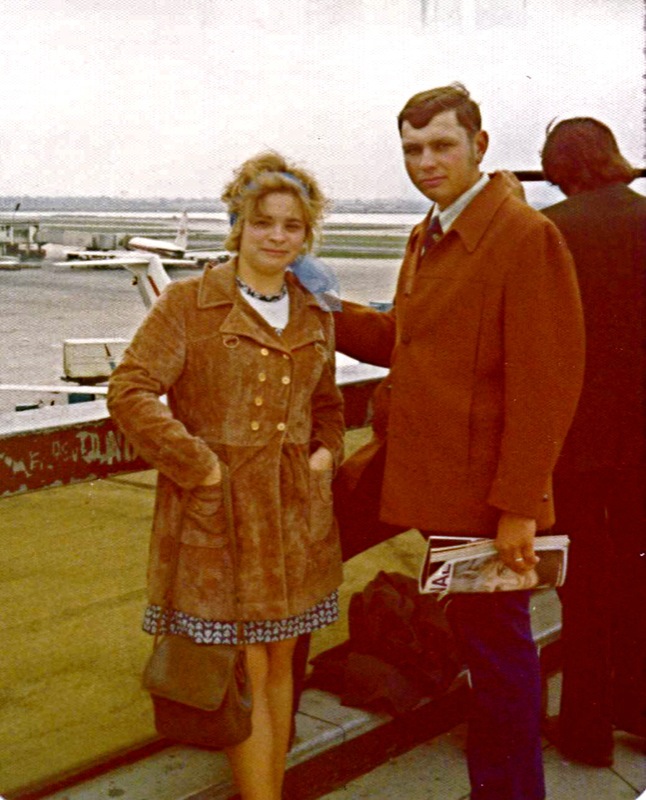
I love, love this photograph of my parents. Dad's tie and baby face aside, it's mom's sassy scarf and swingy coat that make it for me. And she's doing this thing that she still does in photos where she tries not to smile. Because her smiles wreath her whole face so that her eyes crinkle and it looks like she's squinting. She really hates that. Dad looks somber because, as a general rule, that's how all the men in his family smile in photos. It's true.
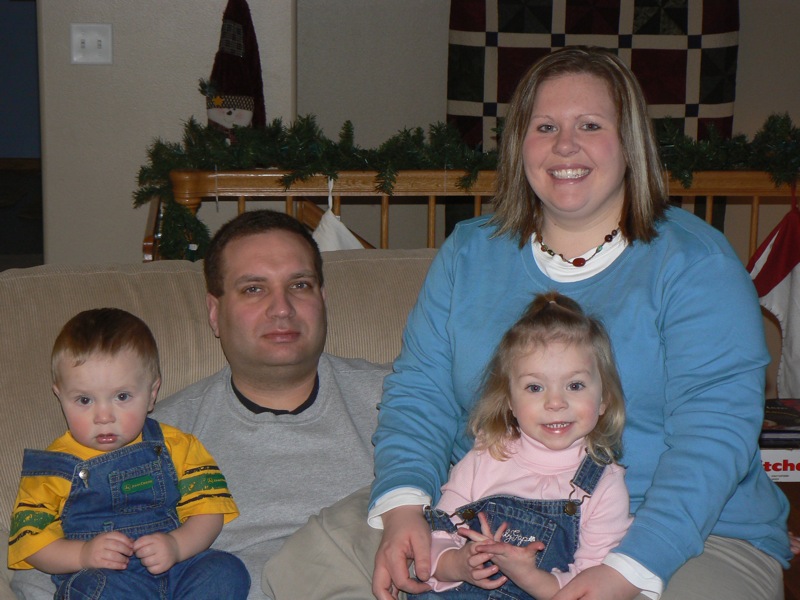

Exhibit A and B: That my brother. He's stoic. And my nephew; he's stoic, too.

I came across the airport photo, taken shortly after my parents were married, a couple years ago when I was looking for some things to put together for my own wedding. And I tried to imagine what it was like for mom to get engaged, plan a wedding, move from a small town in one state to set up house on a farm in another without her mother to assuage any fears and offer guidance. There are moments when I'm overcome by the enormity of what it meant for her to lose her mother so young, because we inherit things, you see. Brown eyes. Wavy hair. Long fingers and toes. And scripts, generations in the writing, explaining who should be loved, how and how much.

I don't know too much about my mom's dad, other than that he owned a filling station, drove a school bus, took his coffee scalding hot and was generally disliked by grandma's family. He always kept a picture of grandma on his bookshelf, though, and when he'd see me looking at it, he'd say "She was a beautiful woman." I remember that, and how he'd pat me on the back and say "That's my girl" when I'd give him a hug and a kiss at the end of a visit. Other than that, grandpa never had much to say, and I’m certain he must have been at a loss when he was left a widower with two barely teenage daughters.

The same way mom was often at a loss with me. I don’t think I was a particularly difficult teenager, just a typical one with the usual sorts of angst, but mom never had the opportunity to be a typical teenager – she was too busy keeping house, going to school and working at this cafĂ© that I hear tell had the best waffles, which were served with ice cream (!) – to have time for usual angst. So she had to improvise her way through the gaps in an unedited draft of motherhood, and it took us some time to figure things out.

In the meantime, we had some epic battles, many of which took place in the kitchen and several of those over 4-H. Mom, as I’ve said before, is an exacting cook, but I imagine that a young girl suddenly in charge of maintaining a house and feeding her family would have to be. Having a recipe and following it to the letter must have been a lifeline – and offered a small moment of connection to her mom.

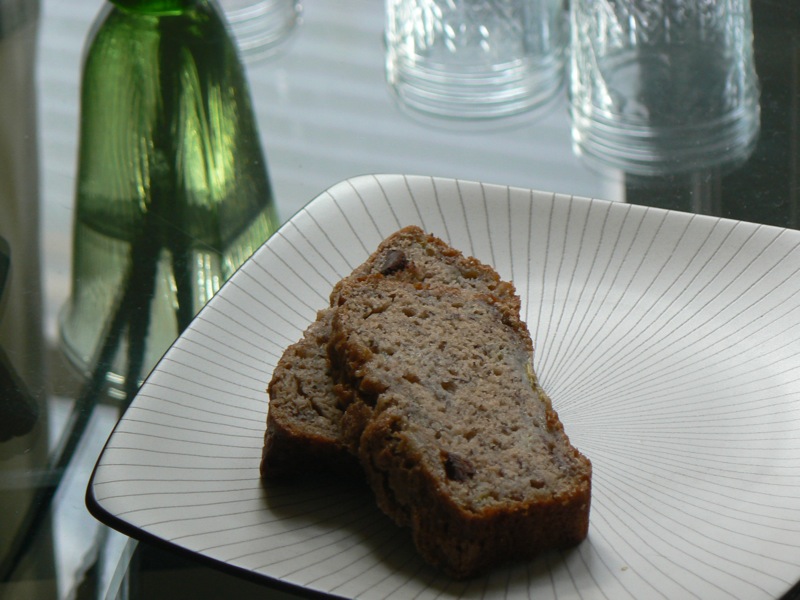
That being said, I’ve made a few adaptations to this banana bread recipe, which is one of the first things I remember making entirely on my own.


Banana Nut Bread (courtesy of my mom)


1. Sift:
2 cups flour
1 teaspoon baking soda
1 teaspoon salt

*I also sifted in two teaspoons of cinnamon; one would probably do just fine, but I’m hooked on the Vietnamese cinnamon from Penzey’s.

2. In a separate bowl, cream:
1/2 cup shortening
1 cup sugar

Then, add 2 eggs, one at a time.

*I used a 1/3 cup of unsalted butter instead of shortening (in general, you need about 1/2 cup butter for every cup of sugar when creaming, so this came together with a little more mess -- i.e. sugar flying out of the bowl -- than usual). I’ve seen a recipe that calls for a 1/4 cup of melted butter to be stirred in at the very end, but I'm not sure how it would affect the texture and structure of the bread, though I recently made a banana bread that didn’t have any butter or shortening and it was wonderful -- so I might try that melted butter thing next time.

3. In a separate bowl, beat:
1 cup bananas (about three)
1/2 cup milk
1 tablespoon vinegar

*I’ve always wondered about the vinegar; I honestly thought it did something particular to the bananas, so I asked mom about it. She said it was supposed to be stirred in with the milk first, to make it more like buttermilk...I just went with straight-up buttermilk; I had it on hand. And I added a generous teaspoon of vanilla, though you could also put in the same amount of dark rum, if you were so inclined.

4. Mix the banana mixture in with the creamed mixture alternately with the flour mixture. Stir until just combined and add in 1/2 cup nuts of your choice. Bake at 325 degrees for 60 minutes.

*I decided to forego the nuts in favor of a 1/2 cup of dark chocolate chips. And I’m not sorry; you won’t be either. In fact, if you’re really feeling crazy, you could add both. I also sprinkled the top of the loaves with some cinnamon sugar before baking.

5. Makes two loaves in smaller pans, but baking time will have to be adjusted accordingly.

P.S. Maybe Yeti would like this version! Nuts are optional.

*I have no doubt Yeti would like this version; she downed an entire loaf the last time I made banana bread, and apparently mom is still amused. While I understand this is part of the danger of having a creature that’s eyelevel with the counters living in your house, I was pretty incensed. I (gently) whapped her on the head with a sock and called her a name that wasn’t very nice, but didn’t involve swear words or taking the Lord’s name in vain.

Once, when my brother and I had pushed mom to the uttermost limits of her patience, she called us a bunch of dorks and deadheads. But I’ll save that treasure for another day, and leave you instead with this lovely, lovely glimpse of spring I found peeking out of my flowerbed last week.

Monday, July 30, 2007

Mennonites Bake Bible, Cabbage in Bread

The church I grew up in was Mennonite in name, but at some point while I was too young to give such things much attention, it left whatever conference it was involved in (I think it was the general conference), becoming, in practice, much like other conservative, evangelical churches: We didn't baptize babies. We didn't raise our hands or clap or sing praise songs. And we certainly didn't sit around talking about our feelings. But we prayed long and hard and often -- and though communion was maybe a quarterly occurrence, we found a lot of excuses to break bread together and I still know where to find everything in that church kitchen, though I haven't been in it for almost eight years.

When I was looking for colleges, my mom wanted me to visit the Mennonite-affiliated Tabor and Bethel, even Grace. But I ended up at Northwestern College, nestled right in the middle of northwest Iowa's Dutch country. And at Northwestern I met Tonya (because we both liked the same boy. Said boy proved unsuitable for both of us, though we ended up being quite compatible). And Tonya, who was from Kansas and related to Naomi Kauffman (of all people), taught me a lot about Mennonites.

This education delved into some of the finer points of pacifism and included an introduction to Northwestern's Anabaptist fellowship group (this mainly involved hymn singing and eating, as I recall) and a briefing on some of the more important moments in our history, including the details of how Mennonites brought wheat to the Southern Plains by sewing the seed into dolls, clothing, blankets and sheets to smuggle it out of Russia.

Apparently Mennonites were good at hiding things. According to my grandma, they also baked Bibles into bread to keep them from being discovered -- and to avoid death for possessing them.

Think about that for a second. And then think about Matthew 4:4, John 1:1-2 and John 6:24-35. I have to confess that I don't know if the story is fact or fiction; it's almost too perfect an illustration; however, a) my grandma told me it's true (and doesn't that just almost always settle the question?) and b) you do have to consider that there are a lot of Mennonite breads, rolls and dumplings that have fillings: Verenicke (cottage cheese, primarily), kolaches (various fruits, cream cheese or poppy seed), bohne beroggis (pinto beans!) and beirocks (cabbage and ground beef), and those are only the ones I can name right off hand.

Until a month or so ago, I had never made beirock myself.
And I hadn't shared a kitchen with someone other than my mom (and Justin) since college and Plex 20. I didn't even realize that it was something I'd missed until I spent a Saturday afternoon visiting Tonya and Kelcee in Des Moines.

Tonya procured a beirock recipe from back home and she even typed it out, after quizzing her mom about the specifics, so that I could write about it later. Her mom is one of those sorts who makes bread by putting stuff together until the dough feels right. So you can understand the work Tonya did on my behalf.

Dough:
2 tablespoons yeast
2 3/4 cups warm water, divided
1/3 cup powdered milk
3 tablespoons sugar, divided
2 teaspoons salt
2/3 cup shortening
2/3 cup mashed potatoes (you can use instant)
1 egg
5 to 7 cups flour, or enough to make a firm dough (we used more than this because it was extremely humid)

Start by proofing the yeast. We mixed the yeast and 1 tablespoon of sugar with about 3/4 cup of warm water.

Then heat the remaining water, sugar and shortening in a saucepan until the shortening is melted.

Beat the egg and add it along with the powdered milk, salt and mashed potatoes to the butter mixture. (We used a leftover baked potato. In theory, this will work. But make sure you mash it first. We missed that step and kept picking potato chunks out of the dough...)

Stir in about three or four cups of flour with the butter mixture. Keep stirring until it's smooth. (This process goes a lot faster if you have a Kitchen Aid, like Tonya.) Keep adding flour until you get the texture you want. Even if you do have a Kitchen Aid, you'll want to do some kneading by hand so that you can gauge the consistency and texture of the dough.

Once you have it kneaded smooth, set it aside in a greased bowl to rise until double.

In the meantime, make the filling.

Filling:
2 pounds hamburger
Large head of cabbage, shredded
Onion, chopped, to taste
Salt, pepper and other seasonings, depending on your preference.

Brown the hamburger, rinse. Add the cabbage, onion and seasonings. Simmer until the cabbage is tender.

Once the dough is ready, punch it down and divide into two or three sections, depending on how much you want to work with at a time. Roll it out and cut it into 4-inch squares.

Place 1/3 to 1/2 cup filling in the middle, fold in the corners -- or fold into a triangle -- and pinch the dough together to seal it.

Bake at 350 degrees for 20 minutes or until golden brown. It should make about three dozen.

I wish I had pictures, but I forgot my camera the day we made them -- I do still have some in the freezer, so when I get them out and thawed, I'll make sure to post a few photos.

These are good, but my husband has a thing about cabbage -- and onions -- and Tonya's husband calls them cabbage cakes. I suspect that means he doesn't appreciate them as he should. Kelcee's husband, God bless him, was the only one who seemed appropriately excited about our afternoon's work.

Because I can't -- or rather, shouldn't -- eat an entire batch of beirocks by myself, I plan to experiment with some different fillings the next time I make them. Tonya and Kelcee mentioned ham and cheese -- and I wonder if a vegetable or potato filling of some sort would work too.

I've also come across a variation on the dough -- more sugar, different process for putting it together -- that I want to try. I'll let you know how it turns out.

Monday, April 30, 2007

What Is Zweiback and Why Would I Knep It?: An Introduction

My mom grew up in Henderson, Nebraska, a hotbed of Mennonite culture and tradition, by all accounts, and one of the few things I know about her childhood in that sacred place -- besides the summer her and her friends found religion and burned their comic books -- is that my grandma made zweiback, or two-bakes, as they're also known, on Saturday night. In the Mennonite tradition, zweiback, as the alternate name implies, are two rolls baked stacked one on top of the other. The trick, I'm told, is keeping them stacked during baking.

In any case, my mom and her twin sister loved these rolls so much that they would sneak five or six apiece and eat them under the sheets after they'd gone to bed. A pretty impressive night's work for a couple of little girls. And, according my dad, an art that hasn't yet been lost. My mom bought a dozen of the rolls at this year's
Schmeckfest in Freeman, South Dakota, and, by her own admission, could only bear to part with two. I'd like to think she ate them under the sheets for old time's sake.

Despite this hearty appetite for zweiback, I can only remember my mom making them once while I was growing up. Perhaps they bring to mind too many painful memories (my grandma died when my mom was but 13), or maybe they never tasted quite like she remembered, or maybe, more practically, they're just a pain to make.

Lately zweiback has become something of an obsession for me, the key to knowing my mom and the grandma I know very little about. You see, I come from a long line of German-Russian women who show love by feeding people the best food they can offer. Food shapes and defines a community even as it nourishes it, and because my mom and dad share a similar heritage and grew up in Mennonite communities, albeit in different states, knowing the food is akin to knowing who I am, or at least where I am and how I came to be there.

I don't know very much about Mennonite history or theology or if it's something I want to claim (at least some of) for myself. I don't know and so zweiback it is -- my first line of inquiry and kneping, I'll tell you now, is simply the way to shape the dough.